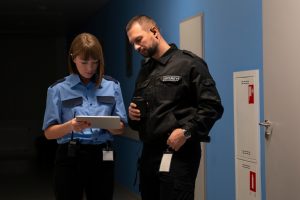

Surveillance is an important aspect of various legal issues in Australia. Whether in family law cases or in determining insurance fraud cases, using surveillance evidence in court cases in Australia relies on factual evidence and proof of a case established through licensed investigators.
In this article, we’ll discuss how surveillance evidence is used in Australia, how it is legally obtained, and how it is used in legal cases.
What is Surveillance Evidence?
Surveillance evidence is a form of information collection through observation and monitoring of an individual’s actions, a location, or an activity. Surveillance evidence is usually collected by licensed investigators or law enforcement agencies.
- Surveillance evidence can include:
- Photographic evidence
- Video evidence
- Written observation reports
- GPS tracking (where permitted)
- Time-stamped activity records
In various cases of using surveillance evidence in Australian court cases, these forms of evidence are used to support claims made by parties in a legal dispute.
The purpose of using surveillance evidence is not to intrude on an individual’s privacy but to gather facts about an individual’s actions in a particular situation.
The legal process relies on verifiable facts and evidence in making a decision in a legal dispute. Surveillance evidence is an objective form of evidence that can help in clarifying a situation where parties in a legal dispute have different claims.
1) Verifying Claims
Surveillance evidence can be used to confirm if what a person claims is actually true.
2) Detecting Fraud
Insurance companies frequently utilise surveillance evidence to investigate suspected cases of fraud.
3) Supporting Legal Arguments
Significant evidence obtained via surveillance can be used to defend legal claims related to family law, workplace disputes, and other civil law.
4) Establishing Timelines
Video clips and observer notes can be used to determine when something occurred.
As a result of these advantages, surveillance evidence frequently surfaces in Australian legal proceedings.
Surveillance evidence is used in a range of legal proceedings across Australia.
Family Law Matters
When it comes to custody or parenting plans, surveillance evidence can be used to monitor conduct that has an impact on a child’s well-being, such as:
- Abuse of substances
- Negligent conduct
- Flouting of court orders
- Hazardous living conditions
However, it is worth noting that the interests of the child are a priority, and surveillance must be pertinent and lawfully carried out.
Insurance Fraud Investigations
Insurance agencies frequently rely on surveillance as they investigate claims such as:
- Workplace injuries
- Disability claims
- Personal injuries
For example, an individual may claim they are not able to work because of a serious injury. However, surveillance evidence of them participating in physical activities that are contrary to their claim can be presented before a court of law.
Surveillance has been used in numerous cases before different courts across Australia to reveal fraudulent claims.
Workers Compensation Cases
Workers’ compensation claims and counterclaims frequently involve surveillance evidence to determine if an injured worker is able to perform certain functions or not. Investigators may conduct surveillance to determine if a worker is:
- Engaging in physical activity
- Working a second job
- Engaging in an activity that is not related to their injuries
The surveillance evidence is closely examined by the court to determine if it is accurate and fair.
Criminal Investigations
While law enforcement agencies are responsible for surveillance, private investigators can work with legal teams to gather evidence for a defendant or plaintiff related to a criminal offence. Surveillance can be used to determine:
- Where people were
- Behavioral patterns
- Presence at a specific place and time
Australia has stringent laws regarding surveillance and privacy. For evidence to be acceptable in court, it has to be collected in compliance with the law.
The major considerations in surveillance law in Australia are:
Licensing Requirements
Private investigators involved in surveillance activities have to be licensed to carry out their duties. Each state in Australia has its own rules regarding compliance with licensing requirements.
Public or Private Space
It is acceptable to carry out surveillance in public areas where people do not have any expectation of privacy. Such areas may include:
- Streets
- Parks
- Venues
- Shopping centres
It is illegal to carry out surveillance in private areas without consent.
Audio Recording Restrictions
There are stringent rules regarding audio recordings in Australia. In most states in Australia, it is illegal to carry out audio recordings in private without consent.
Ethical Investigation Practices
Professional investigators follow ethical codes of practice to ensure evidence is collected correctly and accurately.
Improper and deceitful practices can weaken the evidence presented in court.
How Courts Assess Surveillance Evidence
The court does not accept surveillance evidence on its own. The judge will assess various factors to determine its reliability.
Legality of How Evidence Was Collected
- If surveillance evidence was collected illegally, the court will dismiss it completely.
- That’s why legal compliance is important in Australia for surveillance evidence.
The court has to be assured that the evidence has not been altered or interfered with in any way.
Investigator’s evidence includes:
- Original evidence
- Metadata
- Investigation reports
- Chain of custody
These elements will prove the evidence to be authentic.
Relevance to the Case
- The surveillance evidence should be relevant to the case in question.
- If the evidence shows activities irrelevant to the case, it will be dismissed as irrelevant.
Context of the Evidence
- The court will assess the context in which the evidence was taken.
- A short video of a person may not reflect their real condition.
- The judge will assess the full context of the evidence to make a judgment.
Surveillance evidence will be presented to the court along with a detailed report from the investigating agency.
A professional report will include:
- Date and time of observation
- Places of observation
- Description of activities observed
- Photographs and video stills
- Supporting documents
The investigating agency’s report will be presented to the court. The investigating agency will have to present its evidence and explain how it got its evidence.
Challenges with Surveillance Evidence
Surveillance evidence, though strong, has its own limitations and difficulties.
Challenges in surveillance evidence:
- Misinterpretation of Footage
- Video evidence, though strong, can sometimes be misleading and confusing.
For instance, a video of a person moving does not necessarily indicate their potential to work.
Privacy Concerns
The judiciary takes a delicate position when it comes to privacy. Thus, should the surveillance activities cross the line, i.e., illegal and invasive, the evidence will be dismissed.
Limited Observation Window
Surveillance activities only cover a limited period of time. Will the judiciary ask: Does this limited observation period reflect the long-term behaviour of the subject?
As a result, the judiciary examines all the information available before relying on surveillance evidence.
The Role of Licensed Investigators
Licensed and certified private investigators play a crucial role in obtaining credible surveillance evidence.
They provide:
- Legal compliance
- Accurate and complete documentation
- Unbiased and credible evidence
- Court-ready reports
Their expertise ensures that surveillance evidence in Australian law is based on credible and dependable information.
Law firms, insurance companies, and individuals often employ experienced and certified investigators to obtain evidence for court-ready surveillance evidence.
Final Reflections
Surveillance evidence has the potential to be a powerful tool in Australian law, depending on how it is conducted and utilised. The scope of surveillance evidence in Australian law varies from fraudulent activities to family law, and it has the potential to reveal truths, debunk false claims, and deliver justice.
However, the judiciary scrutinises surveillance evidence to determine its legality, accuracy, and relevance before accepting it as evidence in a court of law.
Should you be in a dilemma and surveillance evidence feature in your case, you should seek the services of professionals to ensure ethical surveillance and evidence.
What is surveillance evidence in Australian legal cases?
Surveillance evidence can include photographs, video recordings, and written reports that monitor what a person has been doing. This kind of evidence is used to support or dispute a claim during a legal hearing, as seen in Australian court cases.
Is surveillance evidence legal in Australia?
Surveillance evidence is legal if it has been obtained according to Australia’s laws on surveillance and privacy. Private investigators must abide by state laws and refrain from recording private conversations or entering private properties.
Can private investigators offer evidence to a court of law?
Private investigators can offer evidence to a court of law if they are licensed. Private investigators can also testify and explain how they obtained the evidence.
What types of cases involve surveillance evidence?
Surveillance evidence can be used in different cases, including:
- Family law cases
- Workers’ compensation claims
- Insurance fraud cases
- Personal injury claims
- Civil cases
Can surveillance evidence be dismissed by a court of law?
Surveillance evidence can be dismissed by a court if it has been obtained illegally, tampered with, or if it is not relevant to the case.
How reliable is surveillance evidence in a court of law?
Surveillance evidence can be reliable if it has been obtained by a licensed professional.